

I was fifteen the first time a man asked about my hands.
Not a doctor. Not a teacher.
A bishop.
Carpet the color of oatmeal.
Fluorescent lights humming something that wanted to be a hymn.
His desk between us like an altar.
His wedding ring catching the light
every time he shifted his fingers.
Do you keep the law of chastity?
I didn't know what the law was.
I knew my body was evidence.
I knew his eyes were the inventory.
I knew the door was closed
and my mother was in the hall
and this was holy.
Have you touched yourself?
His hands were soft. I remember that.
Soft like he'd never built anything.
Soft like paper. Like tithing envelopes.
Like the pages of scripture
where God asks Abraham
to put the knife to his son's throat.
Have you touched anyone else?
I was fifteen.
I had touched a girl's hand at a dance.
I had thought about her collarbone for three days.
I confessed this to a man old enough to be her grandfather
while the fluorescent lights
hummed their little hymns
and the carpet held the shape of everyone
who had kneeled there before me.
Good. Good. You're doing the right thing.
So now I'm older.
Now I've built things with my hands.
Now I know what questions do—
how they can open a door
or lock a child inside a room
with a man and his soft fingers
and his inventory.
And I have questions of my own.
Do you think
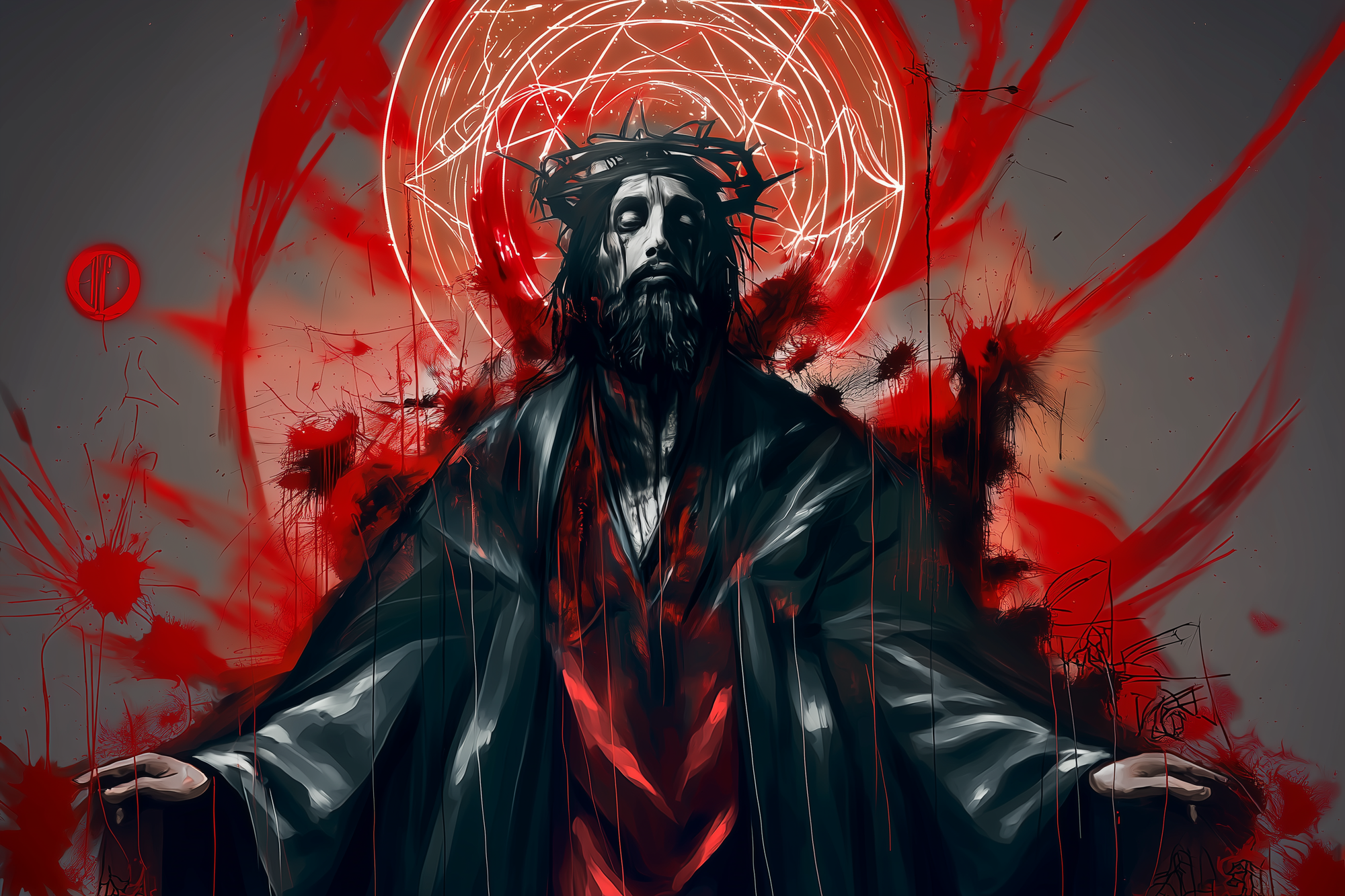
if Christ were here
he'd sign the check—
billions for another temple
while the food bank runs on volunteers
and the homeless shelter closes at nine?
Sacred funds for sacred purposes.
Do you think he'd care about a temple?
His whole ministry was a wrecking ball
swung at the idea
that some doors should stay closed.
That some bodies don't belong.
That holiness requires walls.
But sacred spaces—
He healed on the Sabbath.
Ate with sinners.
Let a bleeding woman touch him
and called it faith.
Do you think
he'd get his endowments
in that carpeted theater?
Watch the film? Learn the handshakes?
Mime his own death
in white clothes
bought from the distribution center
with a barcode on the tag?
John the Baptist,
that wild-eyed cousin out in the desert,
baptized Jesus in the river —
a deliberate spit in the eye of every temple.
The ordinances are eternal.
Then why do they keep changing?
The penalties went away.
The language softened.
The ceremony revised
like software
like terms of service
like something a lawyer touched.
Line upon line. Continuing revelation.
Revelation.
Is that what you call it
when you finally stop
doing the thing
you should have stopped
decades ago?
Do you think he likes it
when bishops smile
and ask children
about their hands?
I was fifteen.
She was twelve, eight, six—
depending on the ward,
depending on the bishop,
depending on how soft his hands were.
The questions have been revised.
After how many?
How many sat in that chair?
How many kneeled on that carpet?
How many learned their body was evidence
before they learned it was theirs?
It's to help them. Keep them clean.
Clean.
I scrubbed for years.
I scrubbed until my hands were raw.
I scrubbed until I understood
the dirt was never on my skin—
it was in the question.
Do you think
he cares more about how people love
than how they kill?
You're gay.
Here are eight thousand missiles, pretty Israel.
Here is silence from the Brethren.
Here is a press release
about the sanctity of marriage
and nothing—
nothing—
about the sanctity of not bombing hospitals.
The church doesn't take political positions.
Show me in scripture a prophet like these.
Show me Elijah with a PR team.
Show me Moses consulting legal
before he parted the sea.
Show me Abinadi
clearing his sermon with correlation
before they burned him alive.
Different dispensations. Different needs.
The prophets in your scriptures bled.
They were hunted. Jailed. Skinned.
They stood in front of kings
and said you are the problem
and knew the cost.
Your prophets stand in front of cameras
and say we love everyone
and offend no one
and risk nothing.
They speak to a global church. They must be careful.
Careful.
The word Abinadi never learned.
The word Samuel the Lamanite forgot
when he climbed the wall.
The word Nephi left out
when he walked back into Jerusalem
the third time.
Your prophets are afraid of the New York Times.
Your prophets are afraid of stock prices.
Your prophets are managed, consulted, media-trained—
every syllable approved
by someone whose job is to make sure
the church doesn't bleed.
They carry a sacred mantle.
Then why does the mantle
look like a silk tie
and a quarterly earnings report?
Where are the prophets who thundered?
Who wept in the public square?
Who loved the people enough
to tell them they were dying?
You've traded Jeremiahs for spokesmen.
You've traded fire for focus groups.
You've traded the weight of heaven
for the comfort of conference talks
that say nothing
beautifully.
But the church is true.
The church took a position on my body.
The church took a position on who I could love.
The church took a position
on whether my daughter could bless the bread
or only bake it.
Do you think
women hold the priesthood?
Their role is different. Equally sacred.
Do you think he said Mary, submit—
or do you think he asked her
what do I do?
A righteous man seeks his wife's counsel.
Seeks her counsel.
Then holds the keys.
Seeks her counsel.
Then makes the call.
Seeks her counsel.
Then stands at the podium
while she sits in the pew
with her silent expertise
and her casserole for the luncheon.
But motherhood is divine—
Do you think
different but equal
has ever meant equal?
Do you think
any man in that room
would trade places?
Take the pantyhose and the ugly dress.
Take the counsel that gets sought and ignored.
Take the divine biology that bars you from the room
where the decisions get made.
Would he take it?
…
You're such a pussy.
You know you'd keep your seat.
You'd never take hers.
You delegate. She submits. You win.
I still have the recommend.
Expired now. Plastic-coated.
Barcode on the back
like I'm something to be scanned.
I carried it for years.
Proof I answered correctly.
Proof my body passed inspection.
Proof the man with the soft hands
found me clean enough
to enter.
And I did enter.
White clothes. White walls.
White faces nodding in white rooms.
I mimed my death.
I learned the handshakes.
I promised everything
in a room with no windows
and signs I couldn't read until I'd already signed.
Sacred. Sacred. Sacred.
I was eighteen.
I didn't know I could leave.
Here's what I think.
I think the boy in that chair
deserved a door that opened outward.
I think the girl at the bishop's desk
deserved a body that was hers.
I think the woman in the pew
deserved a voice that counted.
I think the Christ they taught me—
the one who touched lepers,
fed thousands,
wept at the tomb of his friend—
would have flipped the tables
in the temple distribution center.
Would have burned the recommend cards.
Would have held the children
who'd been asked about their hands
and said you were always clean.
I think if he showed up on Sunday,
they wouldn't let him past the foyer.
Wrong clothes. Wrong hair.
No recommend.
No barcode.
Do you sustain the prophet?
I sustain the boy I was.
I sustain the girl in the bishop's office.
I sustain every body
that was made into evidence
before it was allowed to be a body.
And you.
You with the card in your wallet.
You who felt something just now—
that twinge, that crack,
that small voice you were taught
was the Spirit saying stop.
What if it wasn't warning you away?
What if it was telling you
what you already know?
You've been in that room.
You've answered those questions.
You've watched your hands
become something to confess.
And you stayed.
You're still there.
You'll go back Sunday.
You'll take the bread.
You'll bow your head.
You'll feel the twinge again
and call it doubt
and swallow it
like sacrament.
I'm not asking if God is real.
I'm not asking if the church is true.
I'm asking something simpler.
Something the boy in the chair
couldn't ask,
because he didn't know
there was another answer.
When the man with the soft hands
asked about your body—
Did you think?
Or did you just believe
that this
was what clean
was supposed to feel like?